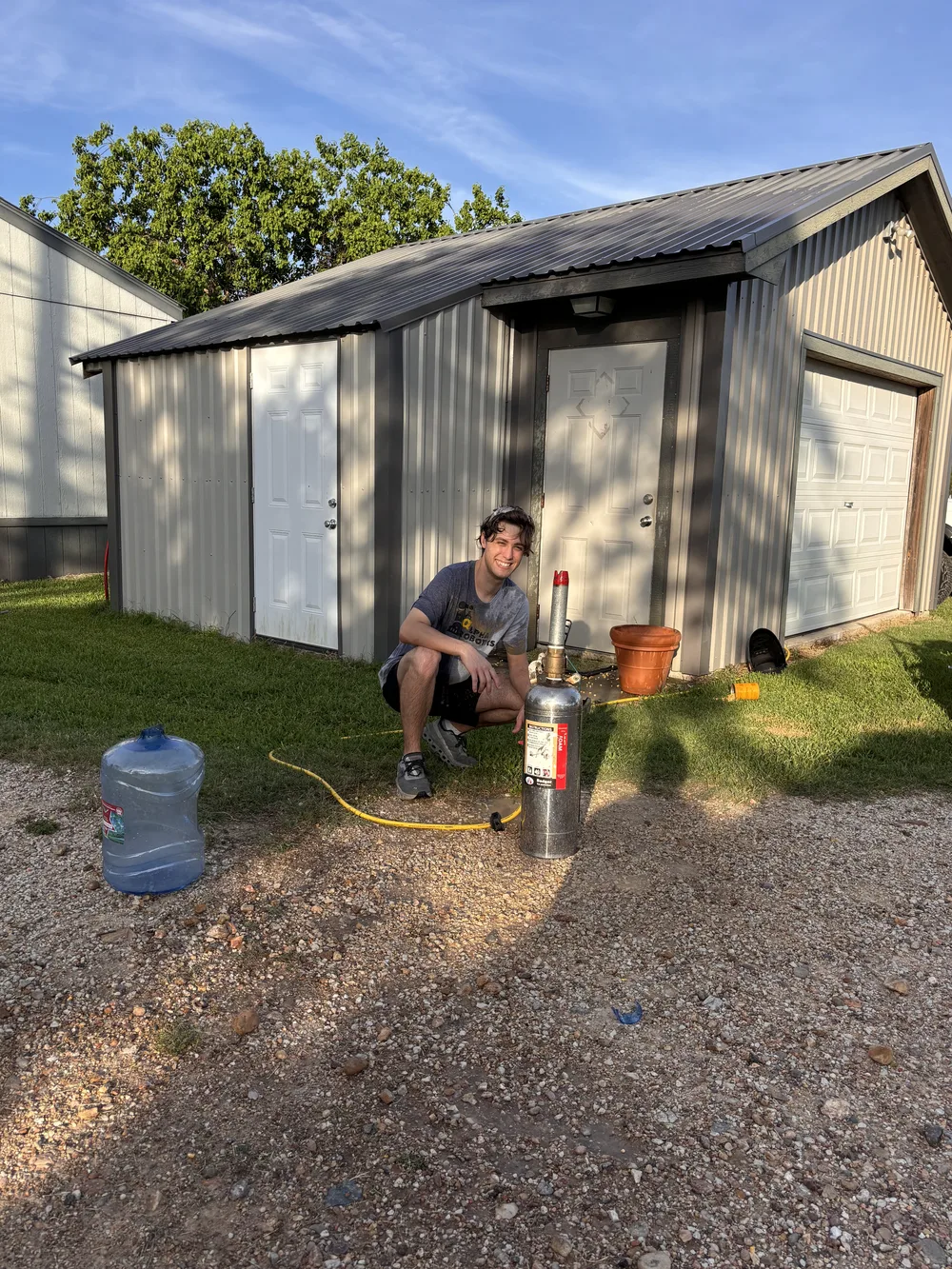
Before this project, I had created a few potato guns. All of which were created with a valve, PVC pipe, and plenty of couplings. I always preferred playing with air cannons over real firearms since they were a lot safer to shoot but still had the power to be exciting. There was a major downfall to plastic air tanks, though that I always kept in mind, all I had to do was drop it wrong and it would explode in my face. So there was always a plan to build a better and safer one.
A New Design
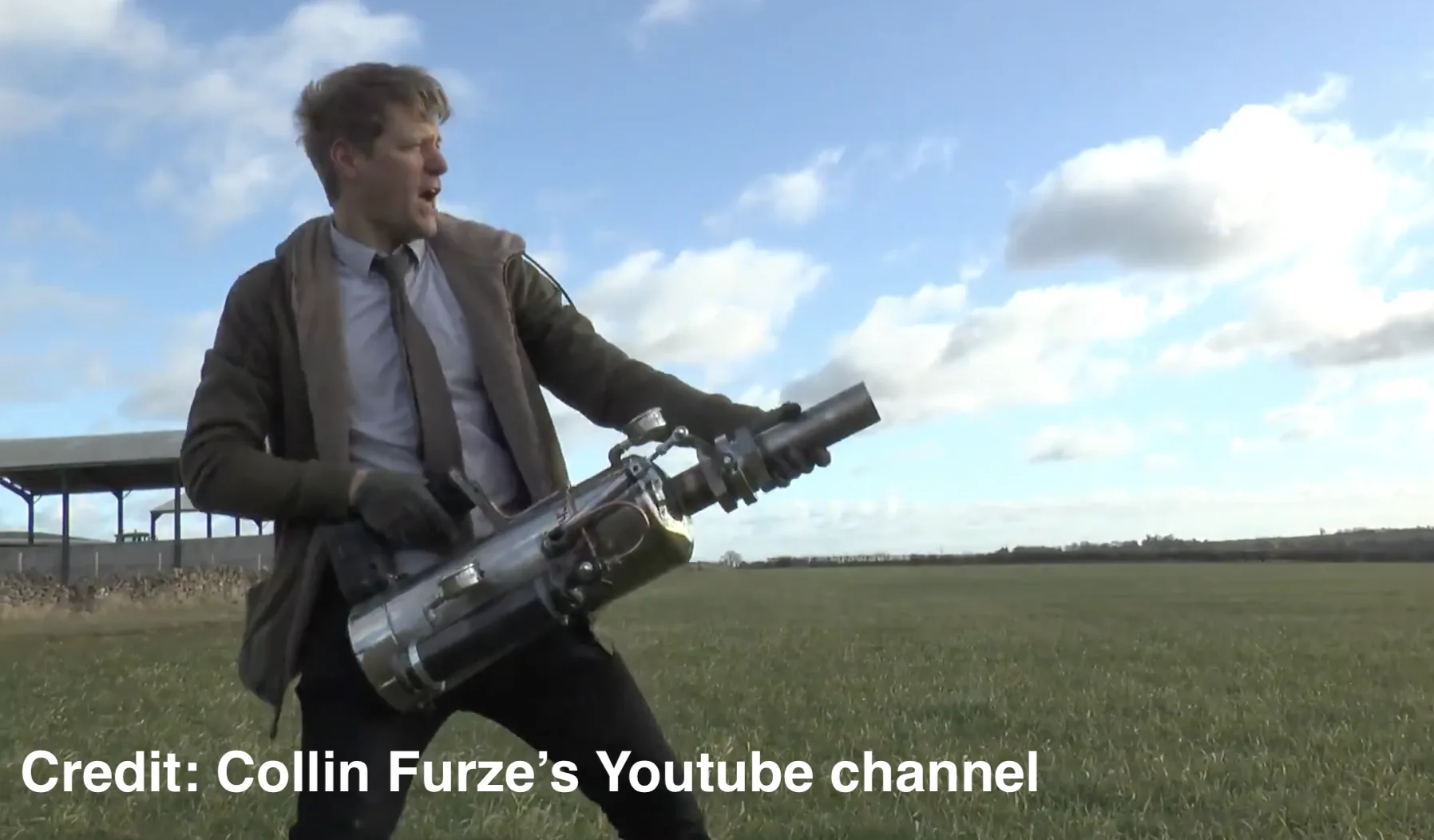
In January 2024, I decided that I was ready to attempt the project, and I had a rough outline of what I wanted the gun to consist of. I really liked the compact form factor of Collin Furze’s small potato gun, the trigger-actuated valve was also something I had been thinking about for a while, but I decided to go with a mechanical trigger as opposed to Collin’s system, which had a pneumatic cylinder with an electric solenoid.
Ultimately, The feature list of my design became:
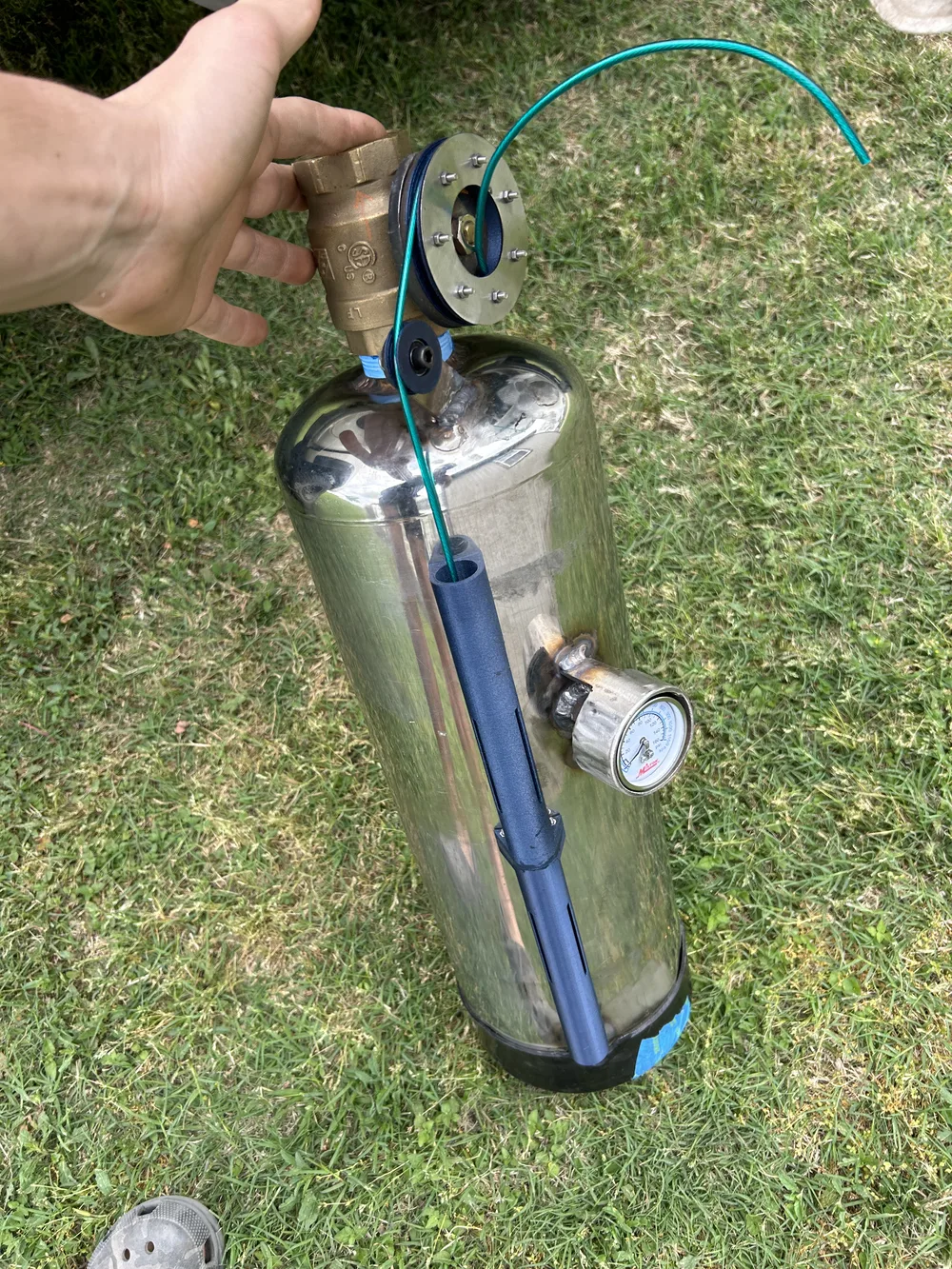
- Metal tank with 1.5" full port ball valve
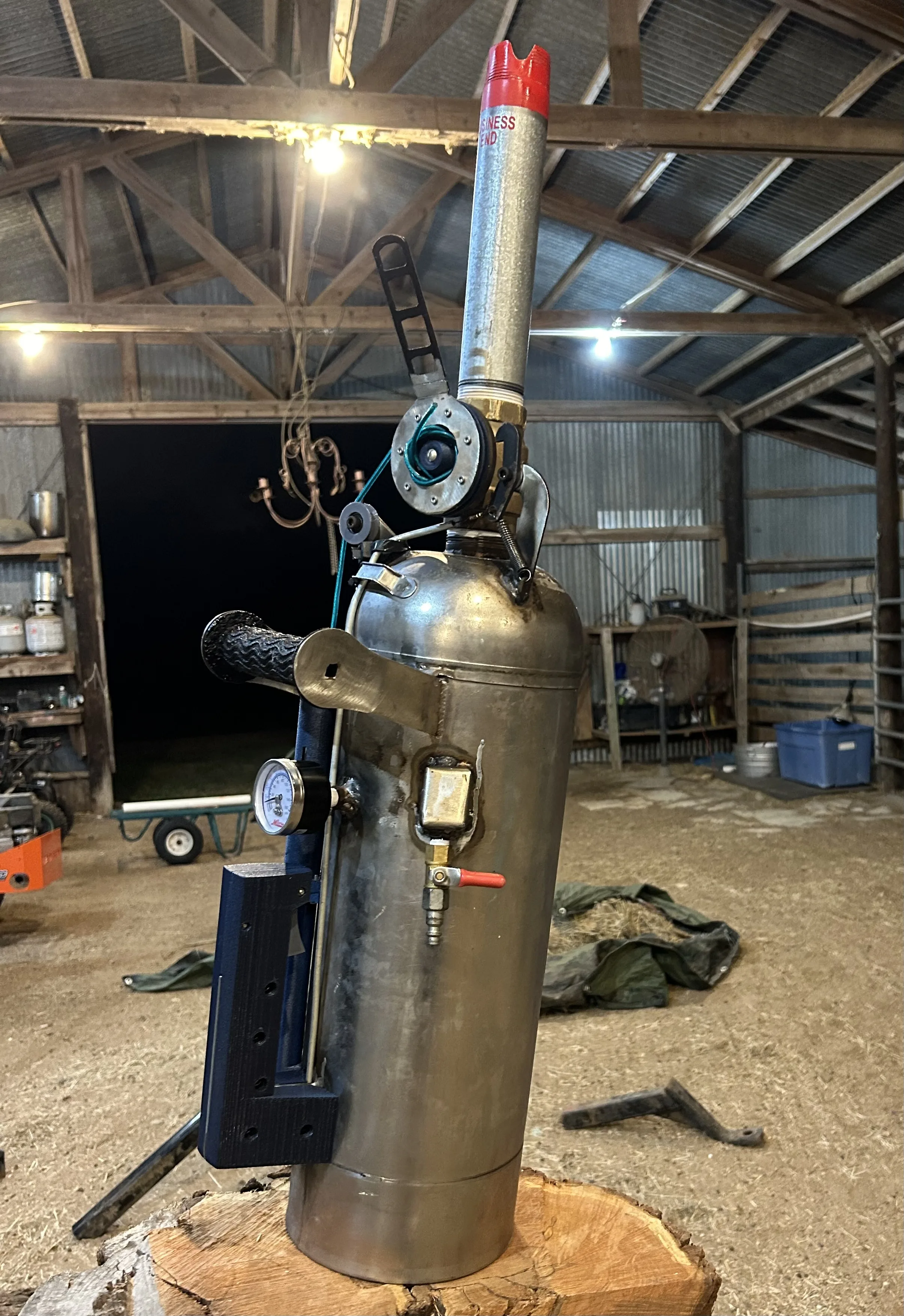
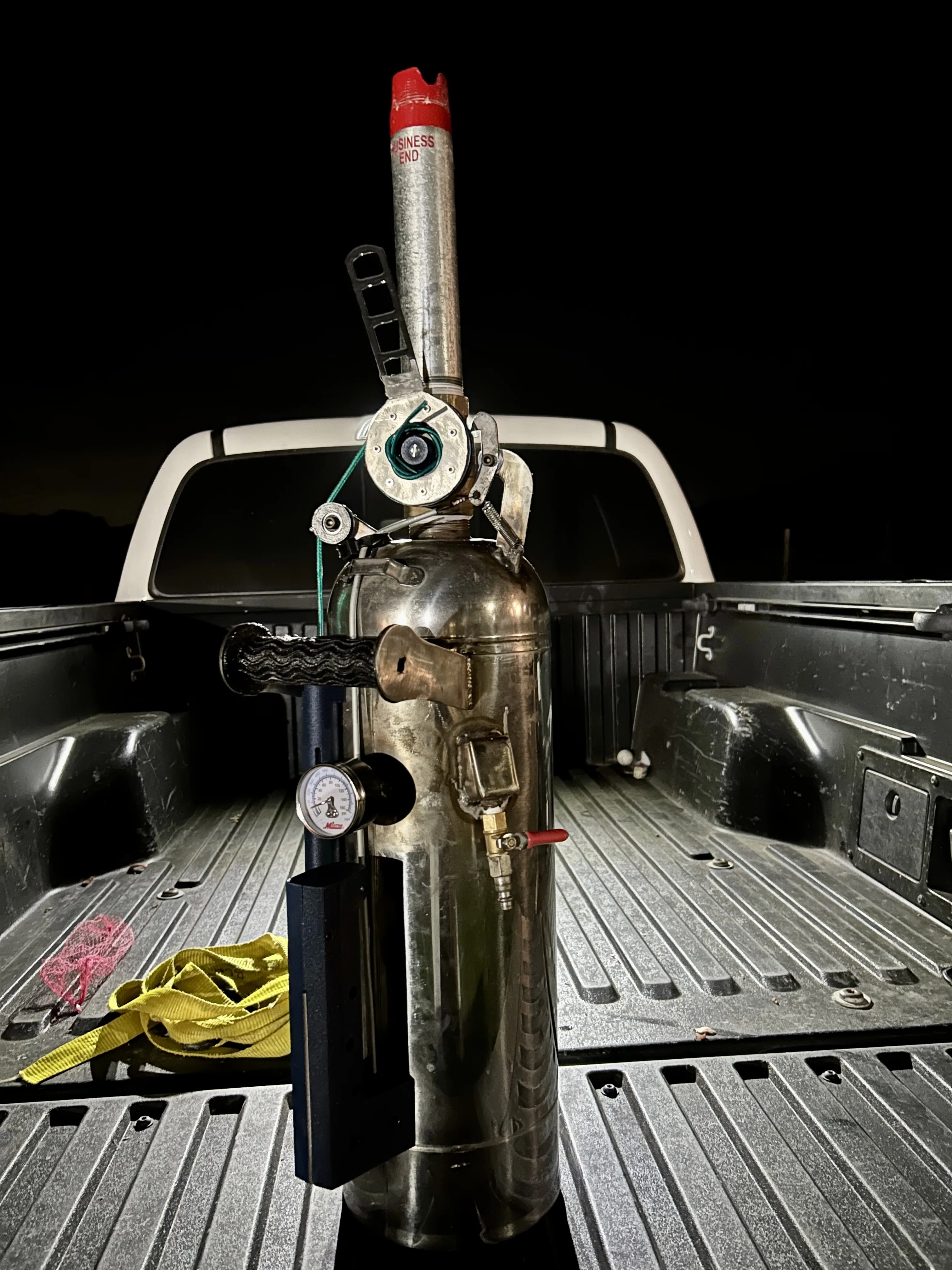
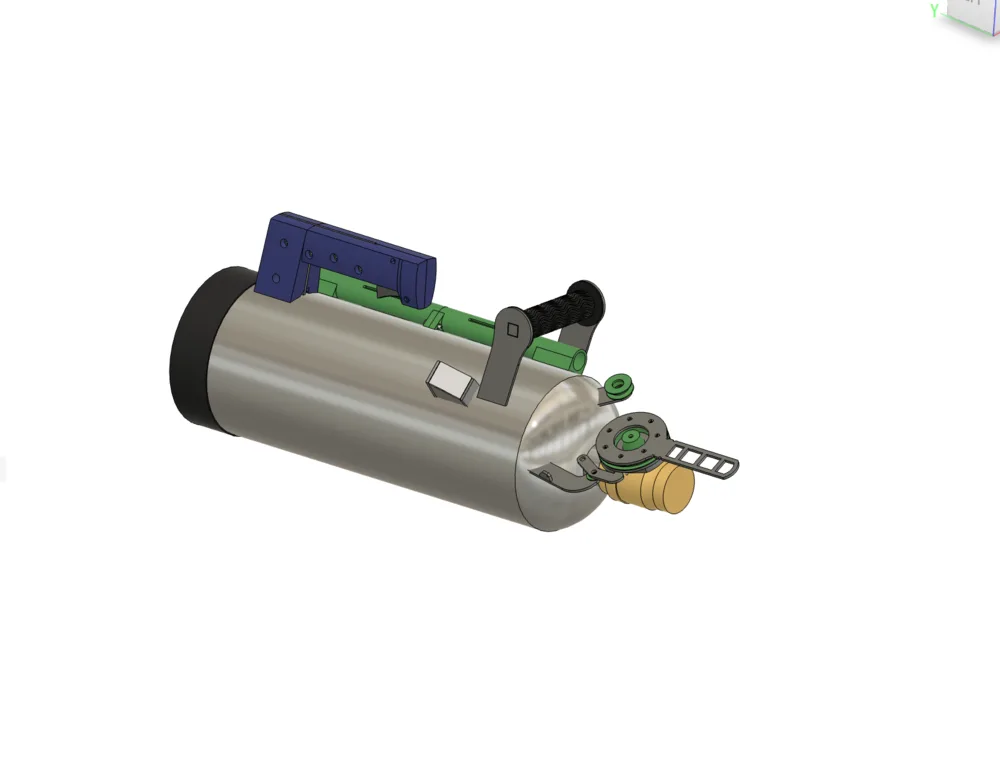
- Handles, I went for two in a sort of minigun style
- Spring-based trigger actuated valve
- 1/4" male quick connect air inlet w/ pressure gauge
This gun features a mere 10" barrel, which does create a trade-off for muzzle velocity, but I’m not sure that a longer barrel would fit as well. Ideally, the barrels would be easier to change, but since the valve angle relative to the tank and action is not fixed, I haven’t attempted a switch yet. The barrel is also ground to be sharper with teeth to easily cut potatoes.
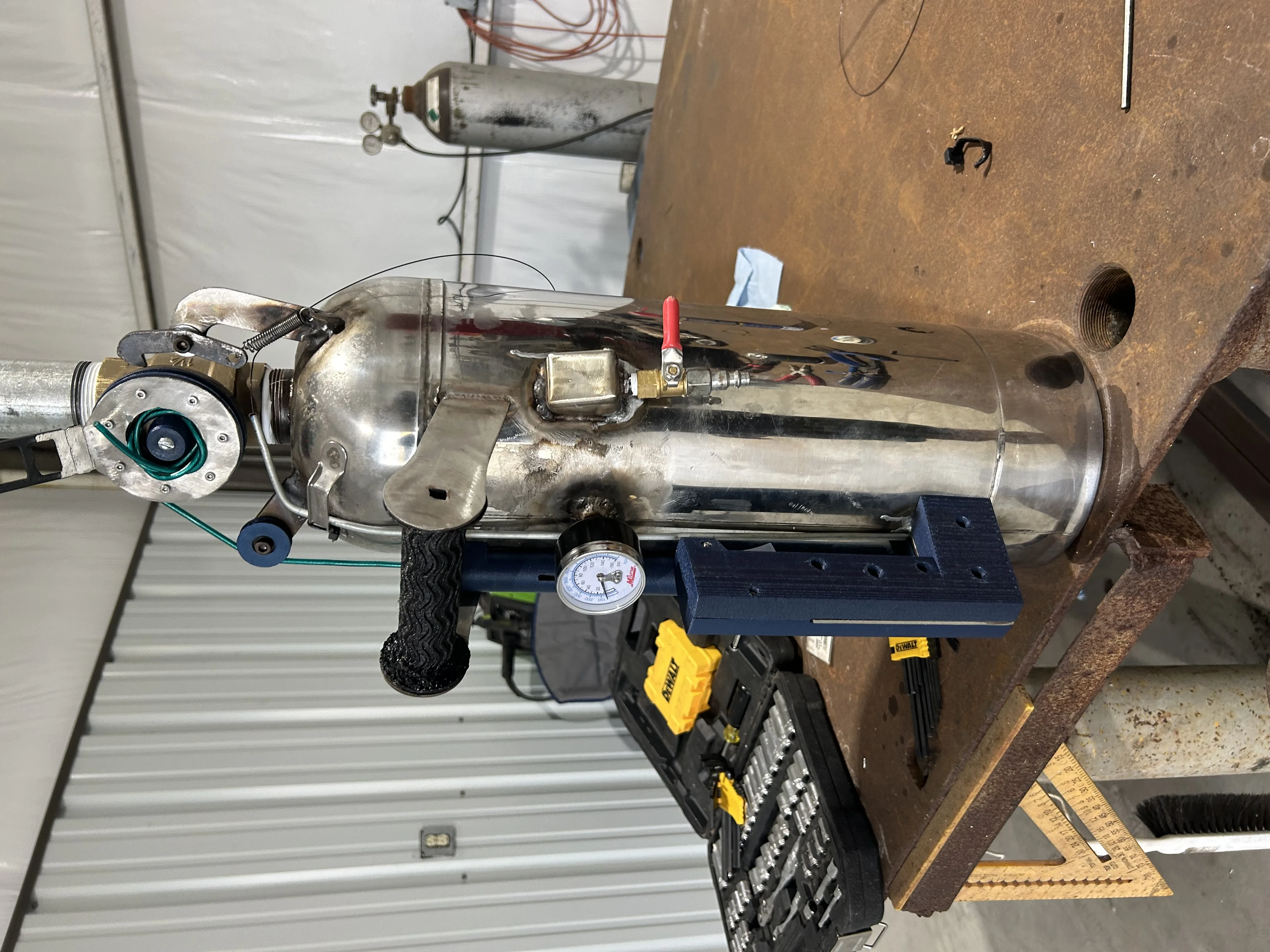
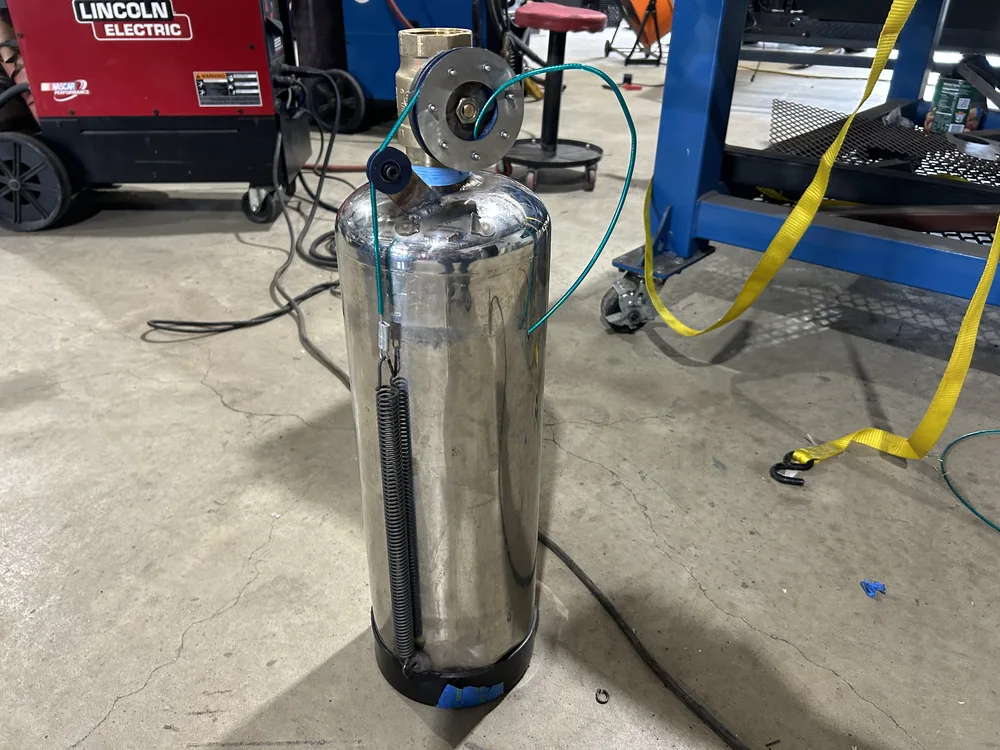
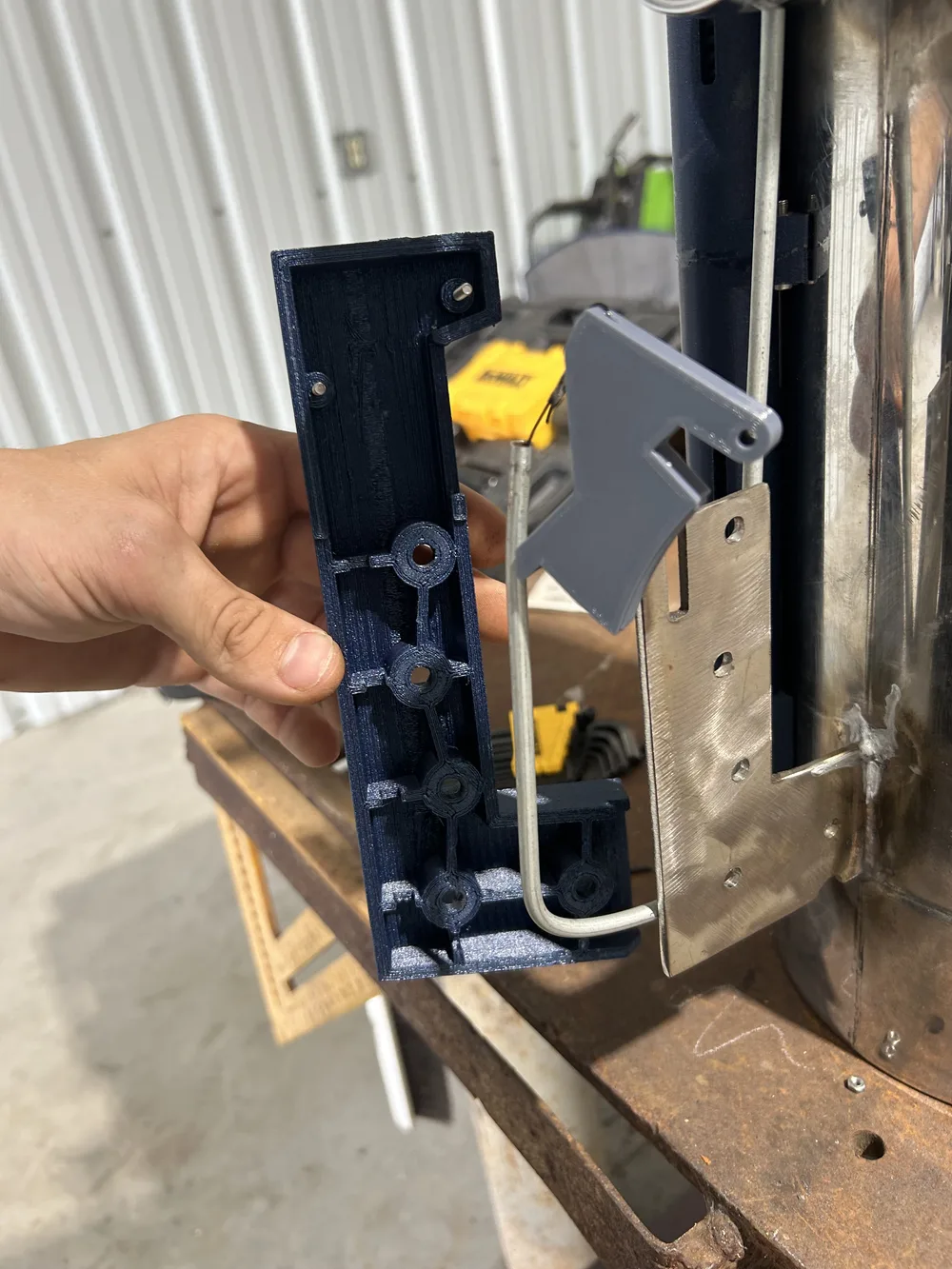
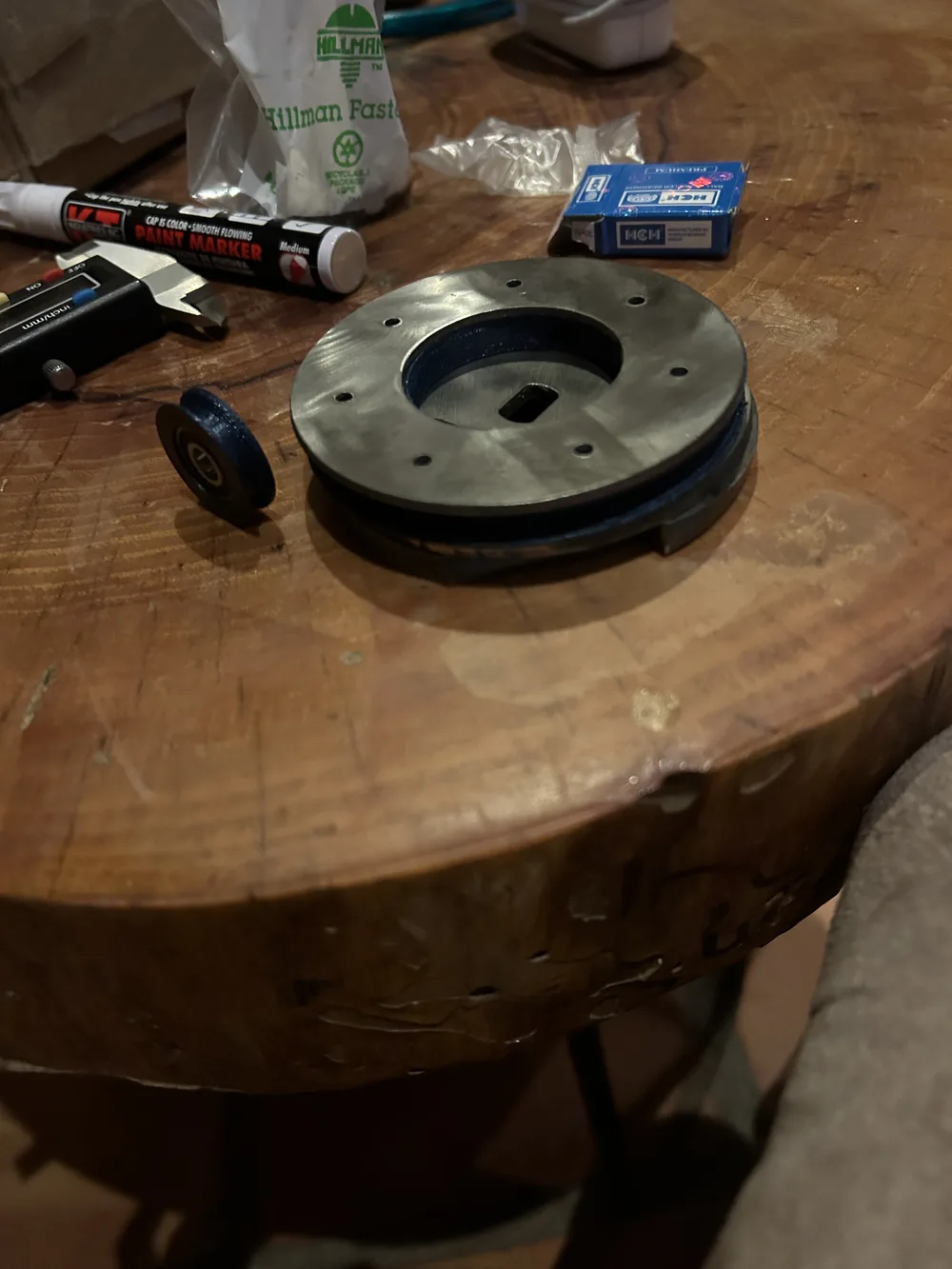
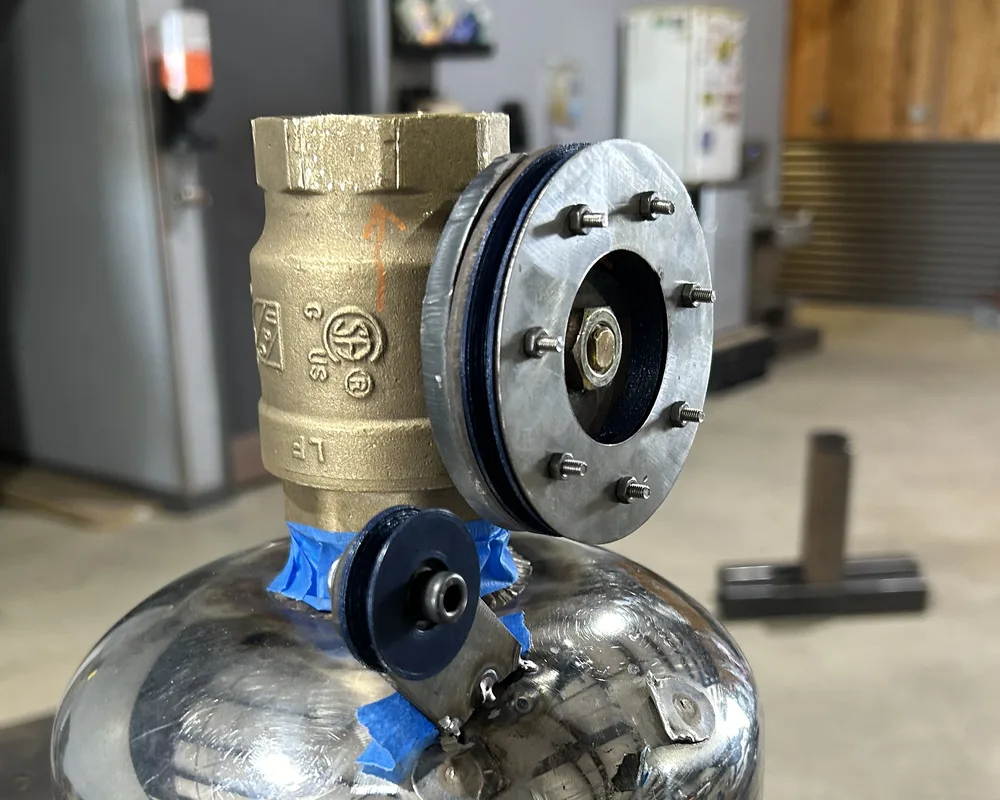
I figured the best way to build the action was a spring connected the valve lever, but after some tests I found that the system would work much better with a cam instead of a fixed lever. The final design has the spring located near the base, then steel cable runs from the spring tube and wraps around the cam, twisting it in the counter-clockwise direction when the trigger is pulled, opening the valve. A lot of trial and error was involved getting the mechanism to work; since I hadn’t learned about hooke’s law yet, I chose to simply try out different springs. The main spring I ended up with came from a dishwasher.
Construction Challenges
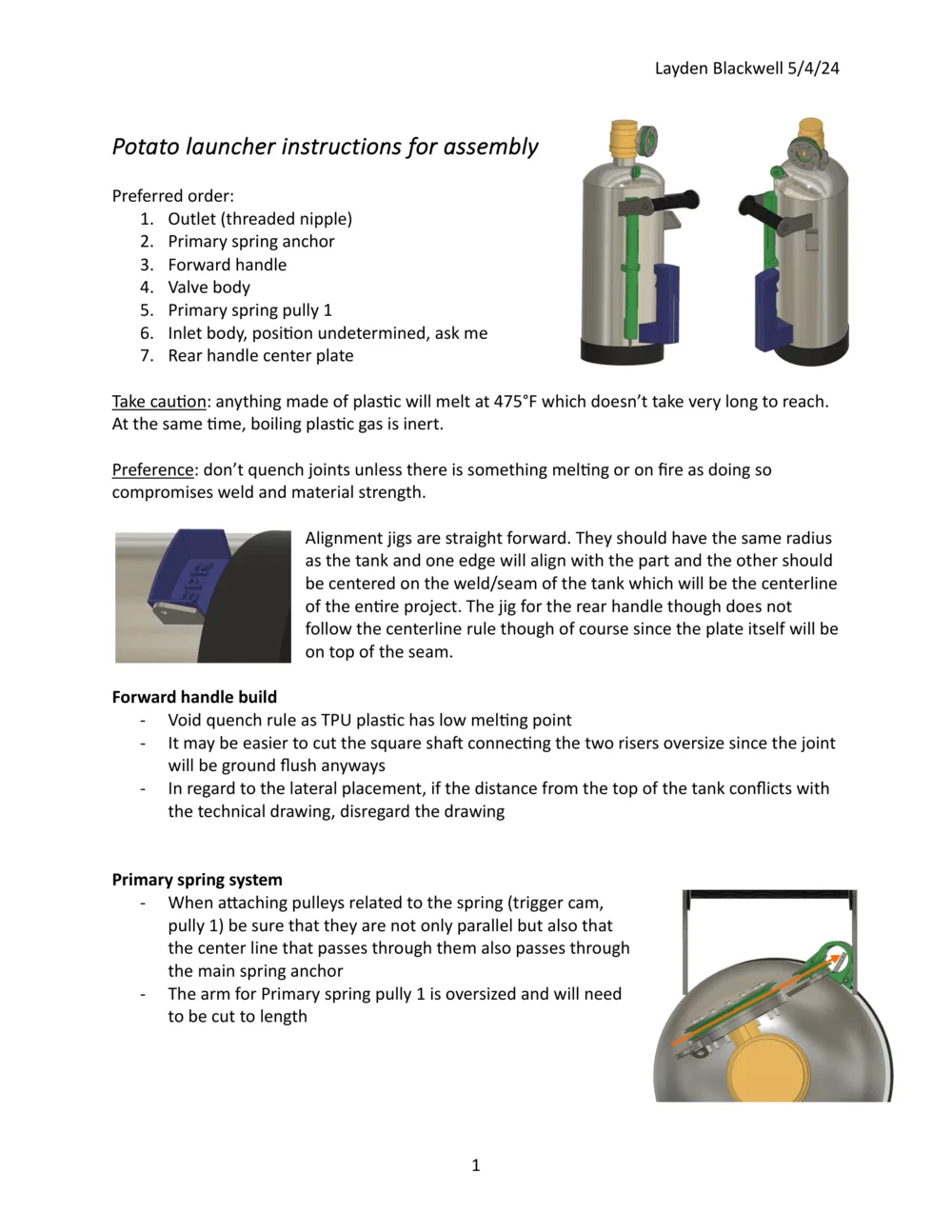
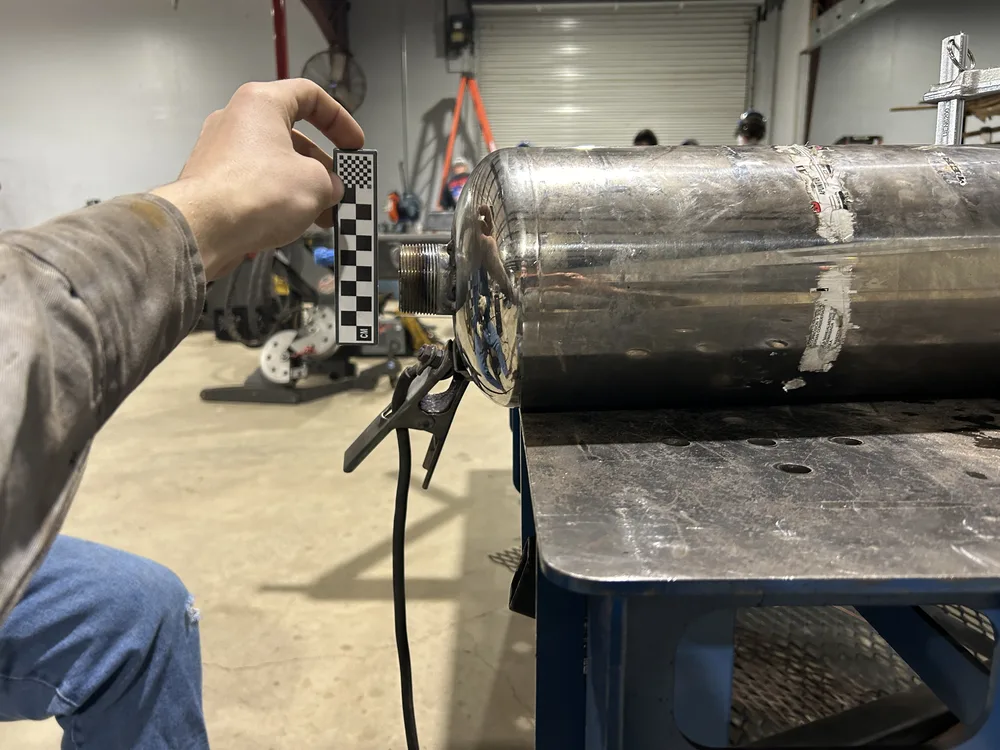
The body is a stainless steel fire extinguisher, then most of the components attached to it are various-sized sheet metal pieces cut on a CNC plasma table and welded to it. Truth be told, I did none of the welding on this project, I had a friend do it for me. The metal on the tank is super thin, and becoming good enough to do the welding for this project was not in the timeframe. Even with a good welder, there were issues getting a perfect seal at some joints. I used Por 15 Fuel Tank Sealer to coat the inside of the tank, which worked well.
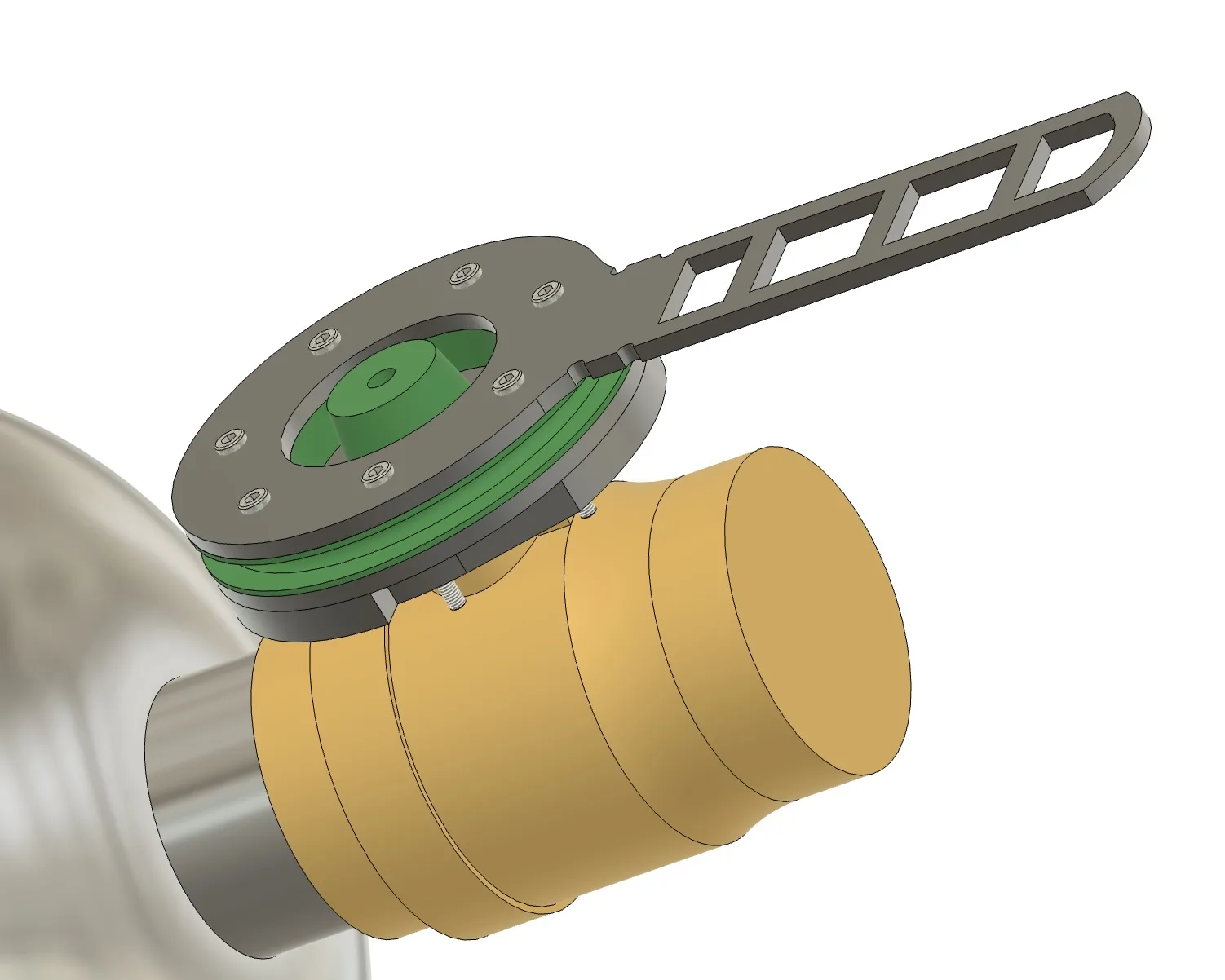
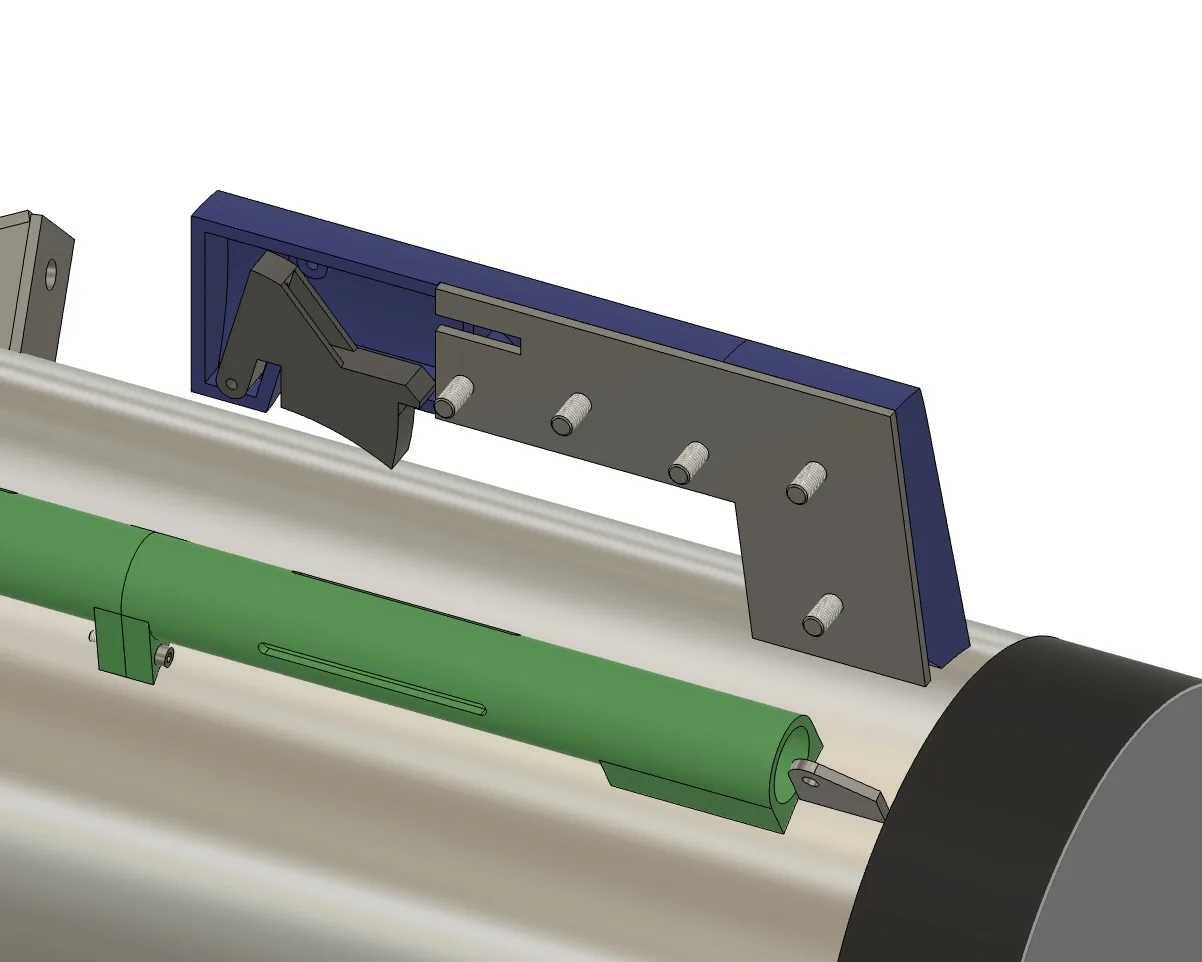
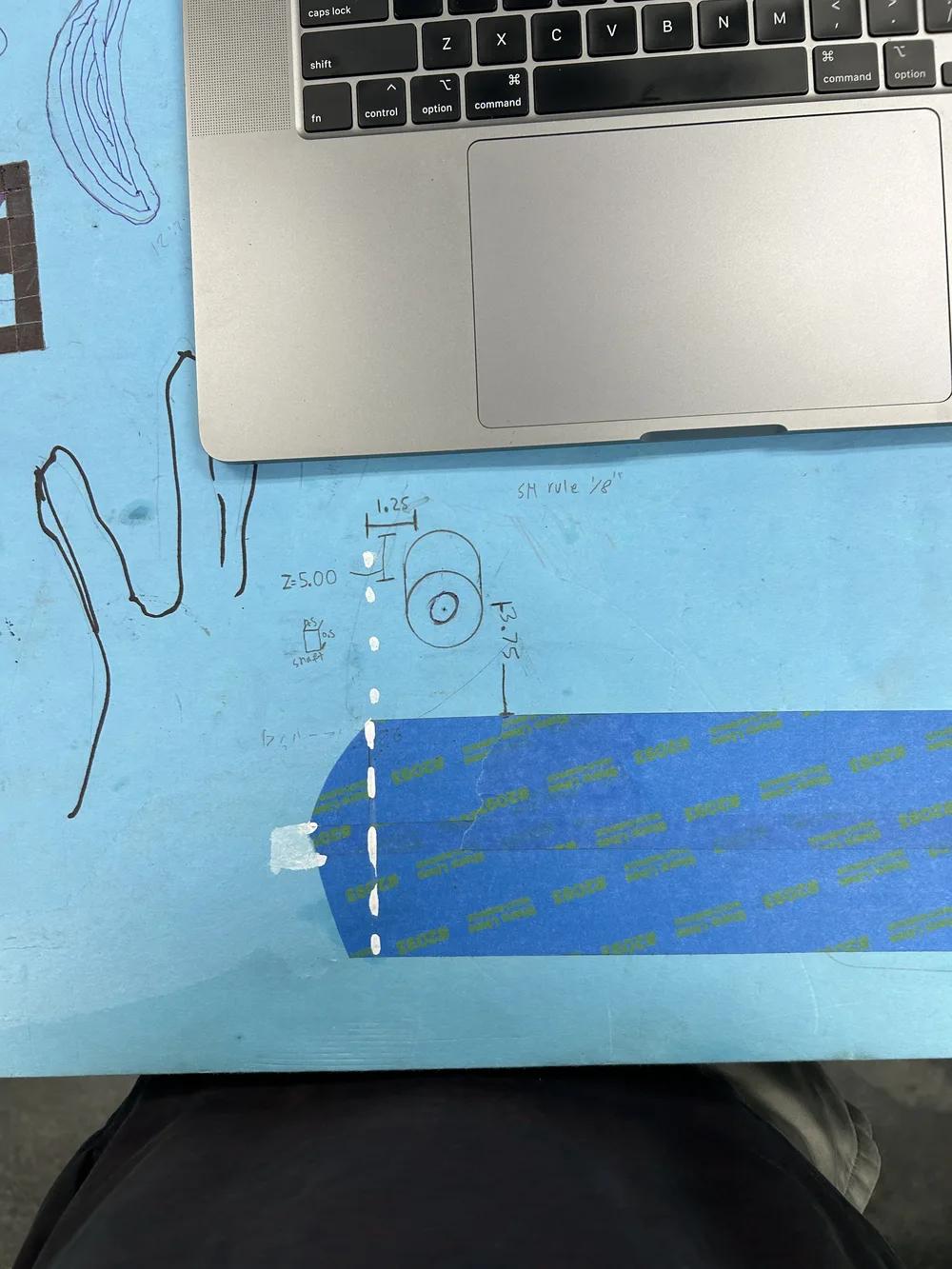
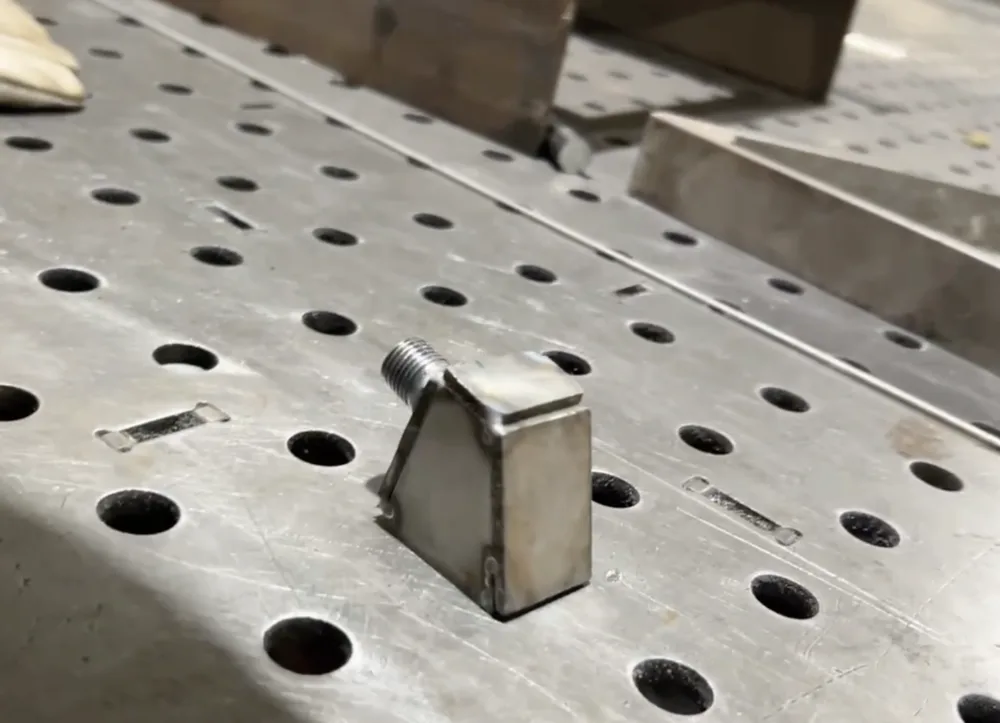
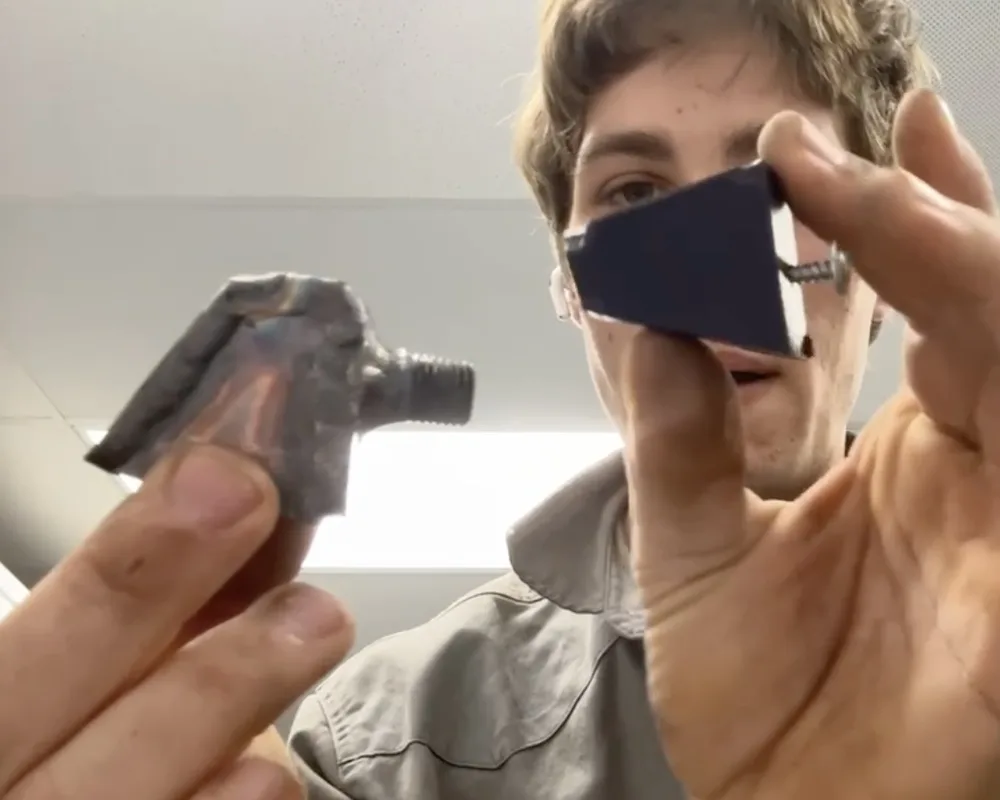
Most of the cannon was designed in Fusion 360 with the intent to be made from sheet metal. Machining and billet parts would’ve been nice, but that was not something I had access to at that time. For complex geometry I used my 3D printer, but due to mainly limitations in strength assemblies with printed parts were given sheet metal skeletons. The trigger mechanism was one of the more challenging parts of the project due to my manufacturing constraints. Unfortunately, as parts increased in thickness, cut quality took a severe hit. The trigger cam and pawl made from 0.25" steel had to be ground down manually since the plasma torch left a very uneven edge.
After about 3 months of work, The cannon came together and has been in periodic use for 2 years now. Since I’m in school, I don’t get to use it all that much, but it is one of my favorite toys to play with when I come back home. It has been one of my favorite projects to date. In the future I’d like to machine washer for it to better attach the cam to the valve as the current one is you guessed it 3d printed, but it’s doing good for now.